

[rank_math_breadcrumb]
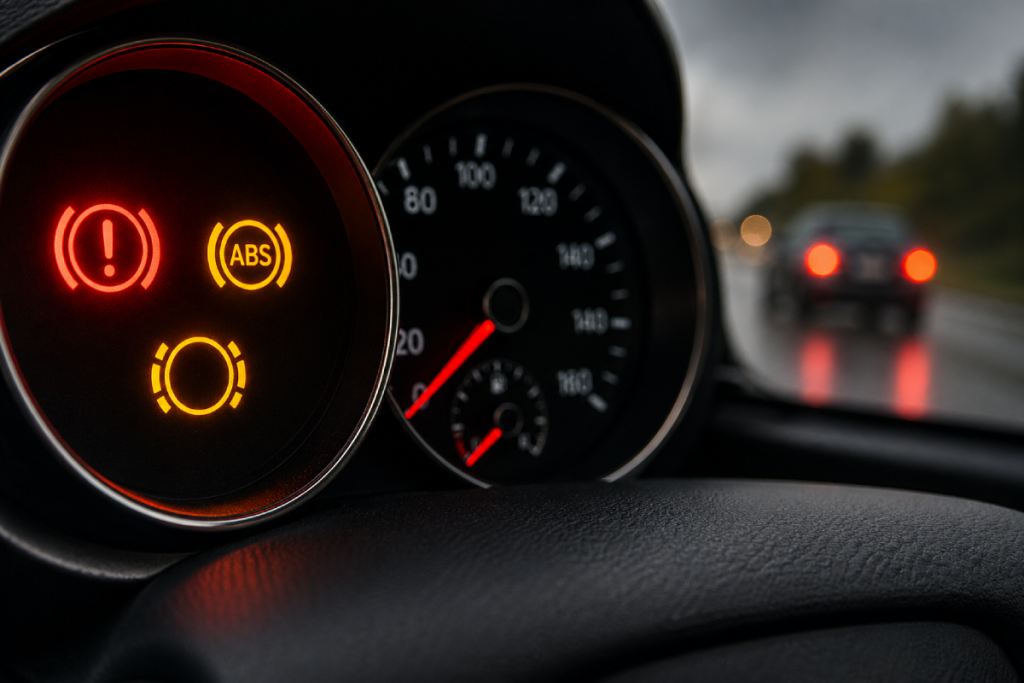
Your modern vehicle utilizes sophisticated sensors to immediately notify you when something is wrong with your brakes. These dashboard brake alerts are not optional; they are critical, urgent warnings that demand immediate attention.
Understanding what your brake warning light means can help you take action before a dangerous situation develops.
In this article, we’ll break down two of the most critical brake-related dashboard warnings, what they mean, and why prompt attention is essential.
Red “BRAKE” or Exclamation Point (!)

This warning typically indicates a critical braking system issue and should never be ignored.
What This Alert Means
This light can signal several potential problems, including:
- Low brake fluid levels
- A leak in the brake system
- Worn brake pads or shoes
- A malfunction in the hydraulic braking system
- The parking brake is still engaged (in some cases)
While sometimes the cause may be as simple as the parking brake not being fully released, you should never assume that’s the case without verifying it.
Why It’s Dangerous
Your braking system relies on hydraulic pressure to function properly. If brake fluid is low or leaking, your ability to stop the vehicle can be severely compromised.
This can lead to:
- Increased stopping distance
- Spongy or unresponsive brake pedal
- Complete brake failure in extreme cases
What You Should Do
If this light appears while driving:
- Safely pull over as soon as possible
- Check that the parking brake is fully released
- Avoid continuing to drive if the light remains on
- Schedule professional brake system diagnostics with your local mechanic immediately
The Anti-lock Braking System (ABS Light)

The ABS light is another important indicator that your vehicle’s braking system needs attention.
While your standard braking system may still function, the Anti-lock Braking System plays a crucial role in maintaining control during sudden stops.
What Is ABS?
The Anti-lock Braking System (ABS) prevents your wheels from locking up during hard braking. This allows you to maintain steering control, especially on slippery or uneven road surfaces.
What the ABS Light Means
When the ABS light turns on, it typically indicates:
- A faulty wheel speed sensor
- Damaged or corroded ABS components
- Electrical issues within the ABS module
- Problems with the system’s control unit
Why It Matters
Even though your brakes may still work, a disabled ABS system can lead to:
- Loss of steering control during emergency braking
- Increased risk of skidding on wet or icy roads
- Reduced overall braking efficiency
In critical situations, ABS can make the difference between avoiding a collision and losing control of your vehicle.
What You Should Do
If your ABS light turns on:
- Drive cautiously and avoid sudden braking
- Be aware that your vehicle may not handle the same in emergencies
- Schedule brake system diagnostics as soon as possible
Our team at Bullet Automotive & Diesel uses advanced diagnostic tools to pinpoint ABS issues quickly, ensuring your system is fully functional and ready when you need it most.
Why Dashboard Brake Alerts Should Never Be Ignored
Every dashboard brake alert is designed with one goal in mind: to keep you safe. These warnings are triggered by sensors that monitor critical aspects of your vehicle’s braking system.
Ignoring them can lead to:
- Reduced stopping power
- Unexpected brake failure
- Increased risk of accidents
- More extensive mechanical damage
Prompt attention not only protects your safety but also helps maintain the longevity and reliability of your vehicle.
The Importance of Professional Brake System Diagnostics
While it may be tempting to rely on guesswork or delay service, modern braking systems are complex and require professional evaluation.
Accurate brake system diagnostics involve:
- Computerized system scans
- Inspection of hydraulic components
- Evaluation of sensors and electrical systems
- Physical inspection of pads, rotors, and fluid levels
At Bullet Automotive & Diesel, we combine advanced technology with hands-on expertise to identify issues quickly and accurately. Our goal is to provide honest, reliable service that gives you complete confidence behind the wheel.
Why Drivers in Greeley and Brighton Trust Bullet Automotive & Diesel
Choosing the right auto repair shop matters, especially when it comes to something as critical as your brakes.
At Bullet Automotive & Diesel, we’re committed to more than just repairs. We’re dedicated to changing how you feel about auto care.
What Sets Us Apart
- Experienced technicians specializing in both gas and diesel vehicles
- Comprehensive services, including engine repair, oil changes, and brake repair
- Honest recommendations with no unnecessary upselling
- A focus on safety, reliability, and long-term performance
- Friendly, personalized service you can trust
Whether you’re dealing with a brake system warning light or simply want peace of mind, our team is here to help keep you safe on the road.
Don’t Ignore the Signs: Protect Your Safety by Addressing Brake Warnings Early
From the red “BRAKE” light to the ABS warning and brake pad wear indicators, each alert is a signal that your vehicle needs attention.
By responding quickly to these dashboard brake alerts, you can prevent more serious issues, maintain optimal performance, and most importantly, ensure your safety and the safety of others on the road.
If you’re in Greeley, Brighton, or the surrounding Colorado area and notice any brake warning light, don’t wait.
Trust the experienced team at Bullet Automotive & Diesel to provide thorough brake system diagnostics and dependable service that keeps you moving forward with confidence.
Contact us at 970-415-8018 or reach our Facebook page.


