

[rank_math_breadcrumb]

Driving around Greeley and Brighton, Colorado, is all about freedom, but that freedom depends entirely on your vehicle’s ability to stop safely. Your brakes are the single most important safety feature on your car, and the foundation of a good braking system is healthy brake pads.
Over time, these essential components wear down. It’s just a simple fact of driving. Knowing the brake pad replacement signs is crucial for your safety and for saving you money on more expensive repairs down the road.
At Bullet Automotive & Diesel, we’re passionate about keeping you safe. We’ve put together this simple guide to help you figure out how to tell if brake pads are worn and what to do next. We’re not just here to fix cars and diesel vehicles; we’re here to change how you feel about auto repair—starting with honest, reliable advice.
Here are the five key symptoms of bad brake pads you should never ignore.
1. Squealing or Screeching Noises: The Built-in Warning
Have you ever hit the brakes and heard a high-pitched, metallic squealing or screeching noise? This sound is often the first and most common indicator that it’s time for a new set of pads.
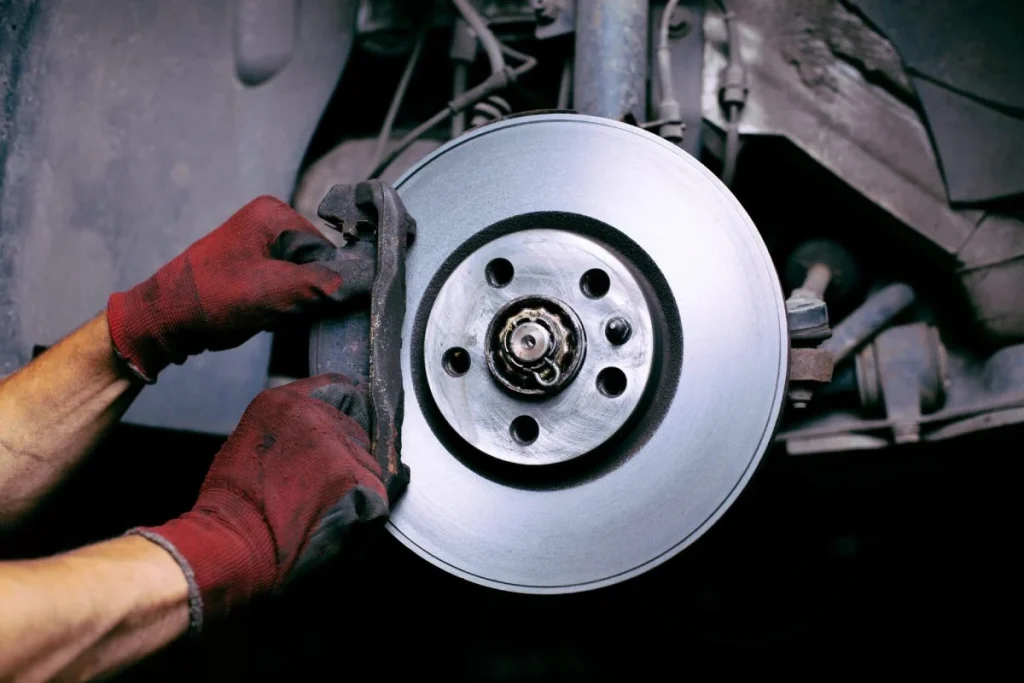
Most modern brake pads come with a clever safety feature: a small, metal shim called a wear indicator. When the pad material wears down to a certain point (typically around 1/4 inch thick), this metal tab makes contact with the rotor (the large, shiny disc behind your wheel). That sound is deliberately loud and annoying—it’s the pad’s way of yelling, “Check me out!”
If you hear this noise, don’t panic, but don’t put off your brake service either. This is the perfect time to schedule a rotor and brake pad inspection before the wear gets too severe.
2. Grinding Sounds When Braking: The Serious Warning
If the initial squealing has turned into a deep, harsh, metal-on-metal grinding noise when braking, your pads are likely completely worn out. This is one of the most serious brake pad replacement signs.
What you are hearing is the metal backing plate of the brake pad directly scraping against the metal of the rotor. This is extremely dangerous because it drastically reduces your stopping power and causes severe damage to your rotors. The rotors are much more expensive to replace than the pads alone.
If you hear grinding, pull over immediately and call a professional brake repair specialist. Driving with a grinding sound puts you and everyone around you at risk and will turn a simple, affordable brake pad replacement into a costly rotor and caliper job.
3. Vibrations in the Brake Pedal or Steering Wheel
Do you feel a shaking, shuddering, or pulsation when you step on the brake pedal? This is known as a brake pedal vibration cause and is a classic symptom of a brake problem.
While worn brake pads can sometimes cause this shaking, the most common reason for a pronounced vibration is often an issue with your rotors. When you use your brakes repeatedly, the heat can cause the rotors to wear unevenly or become what mechanics call “warped” (though the proper term is often “excessive runout” or “thickness variation”).
Regardless of the technical term, a pulsating brake pedal means the surface the pad presses against is no longer perfectly flat. This uneven surface causes the caliper to clamp down with irregular force, which you feel as a shake or pulsation through the pedal and sometimes the steering wheel. If you notice a brake pedal vibration, you need a full car brake inspection to check for signs of bad rotors and worn pads.
4. Longer Stopping Distances
One of the less obvious but most critical symptoms of bad brake pads is a noticeable reduction in braking performance. If you feel like it’s taking you longer than usual to come to a complete stop, or if you have to press the brake pedal down much harder than before, your pads might be too thin to create the necessary friction.
You may also experience a “spongy” or “soft” brake pedal feeling. This means the pedal goes down further than normal or feels soft instead of firm. While this can sometimes point to a different problem in the hydraulic system (like a fluid leak or air in the lines), severely worn brake pads are a frequent cause of reduced braking response.
This symptom is a major safety risk, especially in an emergency. If your vehicle isn’t stopping like it used to, you need immediate brake repair service. Don’t wait for the problem to get worse.
5. Dashboard Brake Warning Light
Many modern vehicles are equipped with electronic brake wear sensors that automatically detect when the brake pads are worn down past the safe limit. When this happens, a warning light—often the word “BRAKE” or a symbol (a circle with parentheses and an exclamation point)—will illuminate on your dashboard.
Unlike a light that comes on when you simply engage the parking brake, this indicator signals that the sensor has been activated. When you see this light, consider it an official notification that you are due for brake pad replacement.
While this light is a great convenience, you should never rely on it as your only sign. By paying attention to the sounds and feelings of your braking system, you can catch wear and tear long before the light even comes on.
Why Healthy Brake Pads Matter for Your Safety

Your brake pads are arguably the most important component in your vehicle’s safety system. They are the friction-creating material that clamps down on the rotors to slow and stop your wheels.
When they are healthy, they provide smooth, predictable, and powerful stopping force. When they are worn, you lose that predictable stopping power. In the unpredictable traffic around Greeley and Brighton, reduced braking performance can mean the difference between a minor incident and a serious accident. Timely brake pad replacement protects you, your passengers, and your investment in your vehicle.
Visual Clues: Checking Brake Pad Thickness
You don’t always need a mechanic to confirm that your pads are getting thin. A quick visual check can give you a lot of information if brake pads are worn.
If your vehicle has open-spoke wheels, you can often peek between the spokes with a flashlight to see the outer brake pad. The pad is the material pressed between the metal caliper and the rotor.
The general rule of thumb for rotor and brake pad inspection is this: new pads are about half an inch thick. If you see less than a quarter of an inch of pad material left, it’s time to schedule a brake repair service. If it looks thinner than an eighth of an inch—or if it’s barely visible—you need to get to an Auto repair shop immediately.
How Driving Habits Impact Brake Pad Wear
“When should I replace my brake pads?” is a question we hear all the time. While most experts suggest getting a brake check every 12,000 miles or so, and pads often last between 25,000 to 65,000 miles, the actual lifespan depends heavily on how and where you drive.
- City vs. Highway Driving: If you spend most of your time in stop-and-go traffic in downtown Greeley or Brighton, you’ll be using your brakes much more frequently than someone who mainly drives on the highway. More braking means faster wear.
- Aggressive Braking: Drivers who slam on their brakes often wear their pads down much faster than those who slow down gradually. Smooth, gentle braking extends the life of your pads and rotors.
- Towing or Heavy Loads: If you frequently haul heavy equipment or tow a trailer through the Colorado mountains, the extra weight puts significantly more stress on your braking system, speeding up the wear process.
Don’t Ignore the Signs: Why Timely Replacement Matters
Ignoring the symptoms of bad brake pads is a costly mistake. If you wait until the grinding noise starts, you’ve not only risked your safety but you’ve also guaranteed that your brake repair service will be more expensive.
When the metal of the worn-out pad grinds against the rotor, it creates deep grooves and scratches that ruin the rotor. Instead of just paying for new pads, you’ll have to pay for a new rotor (or rotor resurfacing) as well. Think of your pads as the affordable, sacrificial shield for the more expensive parts of your braking system. Replacing the pads promptly keeps the rotors healthy.
If you suspect any of the issues above, look for experienced brake repair mechanics who will be honest about what you need.
Professional Brake Inspections: What to Expect
The best way to know precisely when to replace brake pads is to have a professional car brake inspection. When you bring your car or diesel truck into a reliable auto repair shop like Bullet Automotive & Diesel, here’s what our brake repair specialists will do:
- Test Drive: We’ll start by test driving your vehicle to experience firsthand any noises, vibrations, or reduced braking performance you’ve noticed.
- Wheel Removal: We remove your wheels to get a clear, close-up look at all the braking components.
- Visual and Measurement Check: We measure the thickness of your brake pads and inspect the condition of the rotors for signs of uneven wear, scoring, or cracking. We’ll also look for signs of bad rotors.
- System Check: We’ll check the brake fluid level and condition, inspect the calipers, and check all the brake lines and hoses for leaks or damage.
We’ll give you a clear, honest assessment of your braking system and recommend only the services you truly need. We deliver honest, reliable service with a personal touch, ensuring you have the peace of mind that your vehicle is truly safe.
Conclusion: Stay Safe—Don’t Delay Your Brake Service in Greeley CO
Your safety on the road is our top priority. As soon as you notice any brake pad replacement signs—whether it’s a tiny squeal or a full-on pedal vibration—it’s time to act. Don’t take a risk with the one thing that helps you avoid an accident.
For dependable brake repair service in the Weld County area, choose the team that’s committed to exceptional service and your complete satisfaction. At Bullet Automotive & Diesel, we’re your local brake repair mechanics serving Greeley and Brighton, Colorado, and the surrounding area. We’re ready to handle your brake repair, engine repair, diesel mechanics service, and more.
Don’t wait until a small repair turns into a dangerous and expensive one. Call us today at 970-415-8018 or reach our Facebook page to schedule your comprehensive car brake inspection and keep your vehicle stopping reliably!


