

[rank_math_breadcrumb]
Introduction: The Role of Oxygen Sensors in Extending Engine Life

Have you ever wondered what goes on under the hood of your car to keep it running like a top? We all know about the big players like the engine and the transmission, but there are countless smaller parts that work tirelessly behind the scenes. One of these unsung heroes is the oxygen sensor, also known as an O2 sensor. This tiny but mighty component plays a massive role in extending your engine’s life, ensuring it runs smoothly, efficiently, and cleanly. At Bullet Automotive & Diesel in Greeley and Brighton, Colorado, and the surrounding area, we believe that understanding these vital parts is the first step to becoming a more informed car owner.
Think of your car’s engine as a finely tuned orchestra. Every instrument, no matter how small, has to play its part perfectly for the music to sound great. The oxygen sensor is the conductor, making sure all the other components are in harmony. It constantly monitors the exhaust gases and sends crucial information to your car’s computer, helping it make real-time adjustments. Without this feedback loop, your engine would be running blind, leading to all sorts of problems. In this article, we’ll dive deep into the world of oxygen sensors, exploring their function, their importance, and what happens when they go bad.
What is an Oxygen Sensor and How Does It Work?
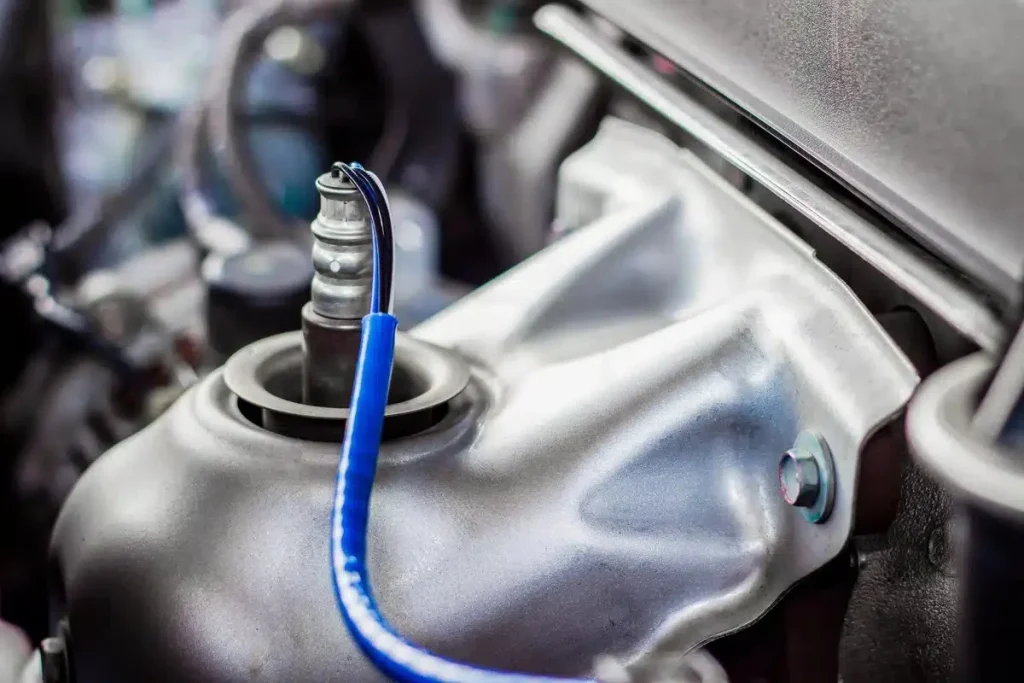
So, what exactly is an oxygen sensor, and how does it do its job? A car’s oxygen sensor is a small, electronic device located in your vehicle’s exhaust system. Its primary job is to measure the amount of oxygen in the exhaust gas and send that data to the car’s engine control unit (ECU). The ECU is your car’s brain, and it uses this information to determine the perfect air-fuel mixture for the engine.
The sensor is made of a ceramic material (zirconium dioxide) and works a bit like a tiny battery. One side is exposed to the exhaust gas, while the other is exposed to the outside air. The difference in oxygen levels between these two sides creates a small voltage. This voltage signal is what the ECU reads. A high voltage means there’s little oxygen in the exhaust (rich mixture), and a low voltage means there’s a lot of oxygen (lean mixture).
Why is this so important? Well, for an engine to burn fuel efficiently, it needs a precise ratio of air to fuel, known as the stoichiometric ratio. This ratio is typically around 14.7 parts of air to one part of fuel. The oxygen sensor’s constant feedback allows the ECU to keep this ratio as close to perfect as possible, ensuring optimal combustion.
Why Oxygen Sensors Are Critical to Engine Performance
The role of oxygen sensor in vehicles goes far beyond just measuring exhaust gases. It is a cornerstone of engine performance. An oxygen sensor that is working correctly ensures that your engine is getting the right air-fuel mixture for every driving condition, whether you’re idling in traffic or accelerating on the highway.
When the air-fuel mixture is just right, your engine runs smoothly. You’ll notice better responsiveness, smoother acceleration, and overall better drivability. A faulty sensor, however, can throw everything off. If the ECU gets bad information, it might add too much fuel (rich mixture) or not enough fuel (lean mixture). Both scenarios are bad news for your engine.
A rich mixture can lead to carbon buildup on your spark plugs and in your exhaust system, which can cause misfires and reduced power. A lean mixture, on the other hand, can cause your engine to run hotter than it should, potentially leading to overheating and even engine damage. The importance of oxygen sensors in cars cannot be overstated—they are the key to a healthy and powerful engine. They truly improve engine performance by maintaining the delicate balance needed for efficient combustion.
The Connection Between Oxygen Sensors and Fuel Efficiency
One of the most immediate benefits of a properly functioning oxygen sensor is improved fuel efficiency. This is a big one for any driver who wants to save money at the pump! The oxygen sensor and fuel efficiency are directly linked. When the ECU receives accurate data from the sensor, it can precisely control the amount of fuel injected into the engine.
If the oxygen sensor fails and sends an incorrect signal, the ECU might default to a “safe” mode, which often means running a rich air-fuel mixture. As we mentioned, this means more fuel is being used than necessary. You’ll notice this right away in your wallet as your miles per gallon drop significantly. It’s a common symptom of a bad oxygen sensor.
A healthy oxygen sensor ensures that your engine is only using the fuel it needs, no more, no less. This not only saves you money but also reduces your car’s carbon footprint. It’s a win-win situation. At Bullet Automotive & Diesel, our trusted mechanics are experts at diagnosing these issues, making sure your car is running as efficiently as possible.
Oxygen Sensors and Emissions Control
Beyond performance and fuel savings, a properly working oxygen sensor is vital for oxygen sensor emissions control. This is especially important for passing vehicle inspections and doing your part for the environment. The oxygen sensor works hand-in-hand with your car’s catalytic converter, which is responsible for converting harmful pollutants into less harmful substances.
The catalytic converter needs a specific exhaust gas composition to work effectively. The oxygen sensor helps maintain this composition by ensuring the air-fuel mixture is optimal. If the mixture is too rich or too lean, the catalytic converter won’t be able to do its job properly, leading to a significant increase in harmful emissions like nitrogen oxides, carbon monoxide, and hydrocarbons.
If you live in an area with strict emissions testing, a failing oxygen sensor could be the reason your car doesn’t pass. A failed sensor is a very common reason for a failed emissions test. This is just another example of how the car oxygen sensor function is critical for both your vehicle’s health and the environment.
Common Signs of a Failing Oxygen Sensor
Knowing the signs of a bad oxygen sensor can save you a lot of headaches and money down the road. While some symptoms can be subtle, others are hard to ignore. Here are the most common indicators that your oxygen sensor might be failing:
- Illuminated Check Engine Light: This is the most common symptom. The oxygen sensor check engine light will turn on when the ECU detects a problem with the sensor’s signal. While this light can indicate many issues, an O2 sensor fault is a very frequent cause. When you see this light, it’s best to have a professional diagnose the exact problem.
- Poor Fuel Economy: As mentioned earlier, a failing sensor can cause your engine to run rich, leading to a noticeable drop in your miles per gallon. If you’re filling up more often than usual, a faulty oxygen sensor could be the culprit.
- Rough Idling or Misfires: An incorrect air-fuel mixture can cause your engine to run rough, especially when idling. You might feel a noticeable vibration or hear the engine “sputtering.”
- Failed Emissions Test: If you recently had a smog check and failed, a bad oxygen sensor is often the reason. This is one of the most direct oxygen sensor replacement symptoms.
- Strong Rotten Egg Smell: A malfunctioning sensor can lead to an inefficient catalytic converter, which can produce a strong sulfur or rotten egg smell from your exhaust.
If you experience any of these symptoms, it’s crucial to have your car checked by an automotive repair shop you can trust. Our team at Bullet Automotive & Diesel is ready to help. Ignoring these signs can lead to more serious and expensive engine damage.
Final Thoughts: Keeping Your Engine Healthy with Proper Sensor Care
Your car’s oxygen sensors are vital components that work tirelessly to ensure your engine runs efficiently, cleanly, and safely. They play a crucial role in everything from oxygen sensor and engine performance to oxygen sensor and fuel efficiency and emissions control. Ignoring a failing sensor is like ignoring a warning from your car’s brain—it will eventually lead to bigger problems.
Regular maintenance and timely engine repairs are the keys to keeping your car in top shape. If you suspect your oxygen sensor is failing, don’t wait. Our team of trusted mechanics at Bullet Automotive & Diesel in Brighton and Greeley, Colorado, is here to provide you with honest and reliable service.
Contact us at 970-415-8018 or reach our Facebook page. We are passionate about keeping you safe on the road and ensuring your vehicle performs at its best. Stop by or give us a call—we’re here to change how you feel about auto repair, one satisfied customer at a time.


