

[rank_math_breadcrumb]

Few things are more frustrating than turning your key or pressing the start button only to find your car won’t start. Whether you’re rushing to work in Greeley or heading out for errands in Brighton, a vehicle that won’t fire up can derail your entire day.
Understanding the common reasons why your car won’t start can help you know when to attempt a simple fix and when it’s time to call in the experts at a professional mechanic shop.
Battery Issues
The battery is the heart of your car’s electrical system, and battery problems are the number one reason vehicles fail to start. Your battery provides the electrical current needed to power the starter motor and get your engine running. When it fails, you’re going nowhere fast.
Dead or weak batteries show several telltale signs. You might hear a clicking sound when you turn the key, or your dashboard lights may appear dim or flicker. Sometimes, you’ll have no response at all when you try to start the vehicle. These symptoms point directly to insufficient power from your battery.
Several factors can drain or damage your battery. Leaving your headlights, interior lights, or accessories on overnight is a common culprit. Extreme temperatures, both hot Colorado summers and frigid winters, put tremendous stress on batteries and can significantly shorten their lifespan. Most car batteries last between three and five years, so age alone can be the problem.
Corroded battery terminals can also prevent proper electrical flow even when the battery itself is good. That white, blue, or greenish buildup around your battery posts acts as an insulator, blocking the connection your car needs to start.
If you suspect battery issues, you can try jump-starting your vehicle. However, if the battery keeps dying or won’t hold a charge, it needs replacement. A professional car diagnostic at an automotive repair shop can determine whether your battery is truly the problem or if something else is draining it.
Starter Motor Problems
Your starter motor is the muscle that physically turns your engine over so combustion can begin. When the starter fails, your engine won’t crank at all, leaving you stranded.
The most common symptom of starter problems is a clicking noise when you turn the key. This clicking happens when the starter solenoid engages, but the motor itself won’t spin. Sometimes you’ll hear a grinding noise, which indicates worn gears inside the starter. In other cases, you might experience complete silence with no sound at all.
Starter motors fail for several reasons. They contain brushes and other components that wear out over time from repeated use. Electrical connections to the starter can corrode or come loose. The starter solenoid, which acts as a switch for the motor, can malfunction. Heat and vibration from the engine also take their toll over thousands of starts.
Diagnosing starter problems requires experience because the symptoms can overlap with battery issues. An expert mechanic can test your starter motor’s electrical draw and mechanical operation to pinpoint the exact problem. Replacing a starter is a job best left to professionals since it often requires working in tight spaces under your vehicle.
Fuel System Issues
Your engine needs fuel to run, and problems anywhere in the fuel delivery system can prevent starting. Fuel system issues range from simple to complex.
The most embarrassing reason your car won’t start is running out of gas. It happens more often than people admit, especially when fuel gauges malfunction or drivers misjudge how far they can go on empty. Always keep at least a quarter tank of fuel in your vehicle.
A clogged fuel filter prevents gasoline from reaching your engine. Fuel filters trap dirt, rust, and debris from your gas tank, and over time, they become so blocked that fuel can’t pass through. Most manufacturers recommend replacing fuel filters every 20,000 to 40,000 miles, but many drivers overlook this maintenance.
The fuel pump moves gasoline from your tank to your engine. When it fails, you might hear the engine crank normally, but it won’t start because no fuel is being delivered. Failed fuel pumps sometimes make a whining noise from the back of the vehicle when you turn the key. Other times, they fail silently.
Fuel injectors spray precise amounts of gas into your engine’s cylinders. When they become clogged or fail, the engine may turn over but won’t fire up properly. This problem is more common in vehicles with high mileage or those that regularly use low-quality fuel.
Professional mechanics have specialized tools to test fuel pressure and flow, pinpointing exactly where your fuel system is failing. Trying to diagnose fuel system problems yourself can be dangerous since you’re working with flammable liquids and high-pressure systems.
Ignition System Failures
The ignition system creates the spark that ignites the fuel-air mixture in your engine’s cylinders. When any part of this system fails, your car won’t start even if everything else is working perfectly.
Spark plugs are small but mighty components that create the actual spark for combustion. They wear out gradually over time, developing deposits or widening gaps that prevent proper sparking. Bad spark plugs often cause rough idling or misfires before they prevent starting entirely. Most vehicles need new spark plugs every 30,000 to 100,000 miles, depending on the type.
Ignition coils transform your battery’s low voltage into the thousands of volts needed to create a spark. Modern vehicles have individual coils for each cylinder, and when one fails, you might experience rough running or difficulty starting. Complete ignition coil failure prevents starting altogether.
The ignition switch itself can wear out from years of turning keys. A faulty ignition switch might not send the signal to start your car, or it might fail to power up your electrical systems. This problem can be intermittent, working sometimes and failing other times.
In older vehicles, the distributor and distributor cap can crack or corrode, preventing spark delivery. Though most modern cars no longer use distributors, if you drive an older vehicle, this could be your issue.
Timing issues related to ignition can also prevent starting. If your spark plugs fire at the wrong moment, the engine won’t run. This requires precise diagnostic equipment to detect and correct.
Alternator Problems
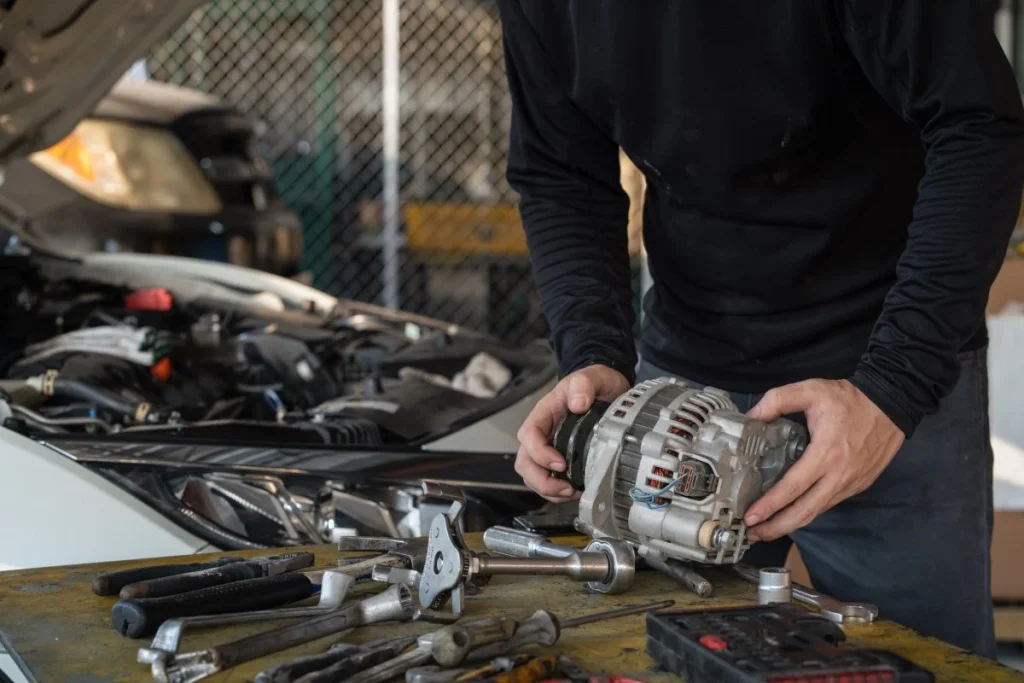
Your alternator keeps your battery charged while the engine runs. A failing alternator won’t prevent your car from starting immediately, but it will eventually leave you stranded when your battery drains completely.
The alternator generates electricity as your engine runs, powering all your vehicle’s electrical systems and recharging the battery. When it fails, your car runs purely on battery power until that power is exhausted. You might notice dimming headlights, flickering dashboard lights, or electrical accessories working poorly before your car finally won’t start.
Common signs of alternator problems include a battery warning light on your dashboard, often shown as a little battery symbol or the letters “ALT” or “GEN.” Your car might start fine in the morning, but struggle or fail to start after short trips because the alternator hasn’t recharged the battery.
Alternators fail due to worn bearings, damaged voltage regulators, or broken drive belts. The serpentine belt that powers your alternator can slip, break, or come off entirely. Sometimes the electrical connections to the alternator corrode or work loose.
Testing an alternator requires measuring the voltage it produces while the engine runs. Professional mechanics have the right tools to test alternator output and determine whether it needs repair or replacement. Driving with a failing alternator damages your battery and can leave you stranded in inconvenient or even dangerous situations.
Security System Malfunctions
Modern vehicles have sophisticated anti-theft systems designed to prevent unauthorized starting. Sometimes these systems malfunction and prevent you, the rightful owner, from starting your own car.
Transponder keys contain tiny computer chips that communicate with your car’s immobilizer system. The system verifies that your key is authorized before allowing the engine to start. When this system malfunctions or doesn’t recognize your key, the engine cranks but won’t fire up.
Key fob batteries die over time, and a dead fob battery might prevent your car from recognizing your key. In many vehicles, you can still start the car by holding the fob near a specific location, usually indicated in your owner’s manual.
After replacing a battery or experiencing electrical problems, security systems sometimes need reprogramming. This requires special equipment that dealerships and professional automotive repair shops have. Attempting to bypass or disable security systems yourself can cause expensive damage to your vehicle’s computer systems.
Some aftermarket alarm systems can develop faults that prevent starting. These systems interrupt the electrical or fuel flow as an anti-theft measure, and when they malfunction, they prevent legitimate starting attempts.
Corroded or Loose Battery Connections
Even a perfectly good battery won’t help if the electrical connections are poor. Battery terminal corrosion and loose connections are surprisingly common reasons why cars don’t start.
Battery terminals connect your battery to your vehicle’s electrical system through thick cables. These connections must be clean and tight to carry the high current needed for starting. Over time, battery terminals develop corrosion that looks like white, blue, or greenish crusty buildup around the posts and cable clamps.
This corrosion acts as an insulator, preventing proper electrical flow. Your battery might be fully charged, but the power can’t reach your starter motor. Similarly, cable clamps can work loose from vibration and temperature changes, creating a poor connection.
Cleaning battery terminals is something many car owners can do themselves with a wire brush, baking soda, and water. However, if corrosion is severe or keeps returning quickly, there might be a deeper problem with your battery or charging system that requires professional diagnosis.
Battery cables themselves can corrode internally or break, especially near the connection points. These problems aren’t always visible from the outside. An expert mechanic can perform voltage drop tests to identify hidden connection problems that home mechanics might miss.
Bad Timing Belt or Chain
The timing belt or chain synchronizes your engine’s moving parts, ensuring valves open and close at precisely the right moments. When a timing belt breaks or a timing chain fails, your engine won’t run, and the damage can be catastrophic.
Timing belts are made of reinforced rubber that degrades over time. Most manufacturers recommend replacement every 60,000 to 100,000 miles, though this varies by vehicle. If you ignore this maintenance schedule, your timing belt can snap without warning, leaving you stranded and potentially causing thousands of dollars in engine damage.
Timing chains are metal and typically last longer than belts, but they can still fail. Chains stretch over time, wear at connection points, and can even break if severely neglected. Signs of timing chain problems include rattling noises from the engine, especially when starting or at idle.
When a timing belt or chain fails, your engine will turn over but won’t start because the valves and pistons are no longer synchronized. In interference engines (where pistons can collide with valves if timing is off), a broken timing belt often destroys valves, pistons, or other internal components.
Timing belt and chain replacement is complex work requiring special tools and expertise. The job involves removing numerous engine components to access the timing system, properly aligning timing marks, and reassembling everything precisely. This is definitely work for a professional mechanic shop, not a DIY project.
Conclusion: When Your Car Won’t Start, Professional Diagnosis Makes the Difference
Understanding why your car won’t start helps you make informed decisions about your vehicle’s care. While some issues like dead batteries or loose connections might be simple fixes, many car starting problems require professional expertise to diagnose and repair correctly.
At Bullet Automotive & Diesel, serving Greeley and Brighton, Colorado, and the surrounding area, we understand how stressful it is when your vehicle won’t start. Our team of expert mechanics in Greeley and Brighton has the training, experience, and diagnostic equipment to quickly identify why your car won’t start and get you back on the road safely.
We’re not just about fixing cars—we’re here to change how you feel about auto repair. Whether you’re dealing with engine repair, diesel mechanics, oil change needs, or brake repair, our team delivers honest, reliable service with a personal touch. We take the time to explain what’s wrong, why it happened, and what we recommend to prevent future problems.
Don’t let car starting problems leave you stranded or stressed. When you need professional car diagnostic services, trust the automotive repair shop that puts your safety and satisfaction first. Contact Bullet Automotive & Diesel today, and experience exceptional service that gets you back behind the wheel quickly and confidently.
Your vehicle is an investment, and proper maintenance by qualified professionals protects that investment while keeping you and your family safe on Colorado roads. The next time you face starting problems or any automotive concern, remember that Bullet Automotive & Diesel is here with the expertise and dedication you deserve. Contact us at 970-415-8018 or reach our Facebook page.


